
By Stephen Simon
British Prime Minister Keir Starmer has announced his resignation, bowing to mounting pressure from within the ruling Labour Party less than two years after leading the party to a landslide election victory.
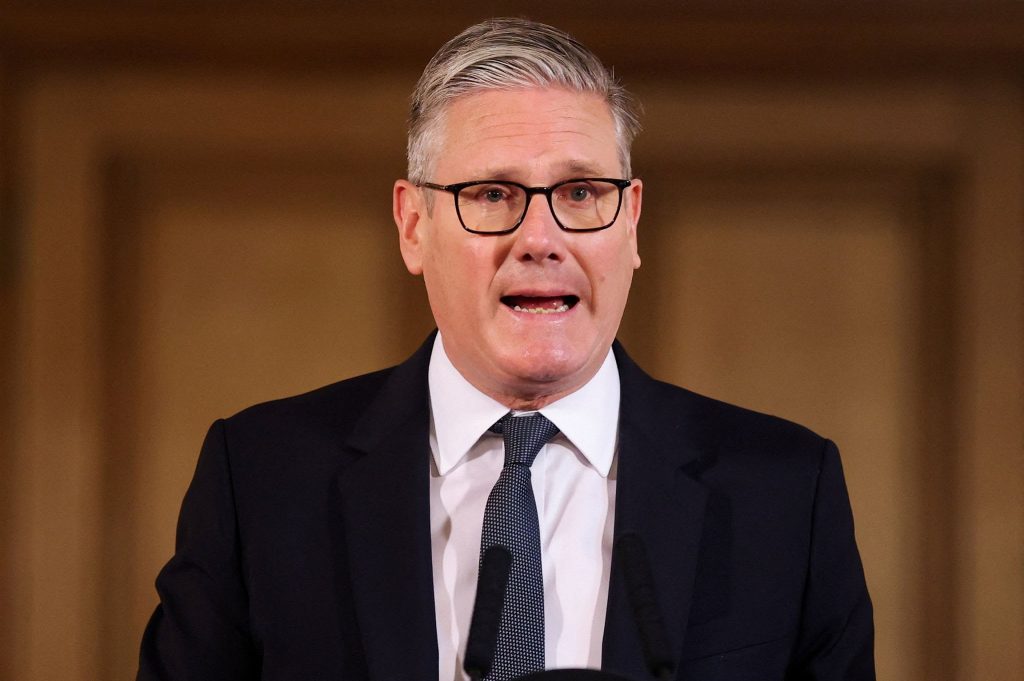
Starmer made the announcement outside 10 Downing Street on Monday, acknowledging that many Labour lawmakers no longer believed he was the right person to lead the party into the next general election.
“The question my party is asking now is whether I am best placed to lead us into the next general election,” Starmer said. “I have heard the answer from my parliamentary party and I accept that answer with good grace.”
His departure sets the stage for a Labour leadership contest that could produce Britain’s seventh prime minister in just over a decade. The process to elect a new leader is expected to begin in July, with a successor likely to be in place before Parliament reconvenes in September.
Among the leading contenders is Andy Burnham, who recently secured victory in the Makerfield by-election. Following Starmer’s announcement, Burnham confirmed he would seek the Labour leadership, attracting support from several influential figures within the party.
Despite announcing his resignation, Starmer will remain prime minister in a caretaker capacity until a new Labour leader is elected. He pledged his full support to his successor and promised an orderly transition of power.
In his farewell remarks, Starmer defended his government’s record, citing achievements in economic growth, wage increases, infrastructure development, healthcare improvements, and stronger protections for workers and renters.
Supporters praised his leadership and decision to step aside. Labour MP Afzal Khan said Starmer would leave office with a “proud legacy,” while Home Secretary Shabana Mahmood credited him with returning Labour to power after years in opposition.
Critics, however, were less complimentary. Former Labour leader Jeremy Corbyn accused Starmer of failing to adequately tackle poverty and inequality, while also criticising aspects of his domestic and foreign policies.

Political observers noted the emotional tone of Starmer’s address. He spoke about the personal sacrifices associated with serving as prime minister and the importance of spending more time with his family.
Starmer entered Downing Street in July 2024 after delivering Labour’s largest electoral victory since 1997, ending 14 years of Conservative-led government. However, a series of policy controversies, political setbacks and declining approval ratings gradually weakened his position, ultimately leading to his resignation.
Attention now turns to the Labour leadership race, with Burnham widely regarded as the early favourite to succeed Starmer and steer Britain through its next political chapter.