
By Stephen Simon
Lagos-based litigation lawyers have called on the Federal Government to adopt a broader, alternative strategy in tackling illicit drug cultivation in Nigeria by providing financial grants, agricultural support, and alternative livelihood opportunities for cannabis farmers.
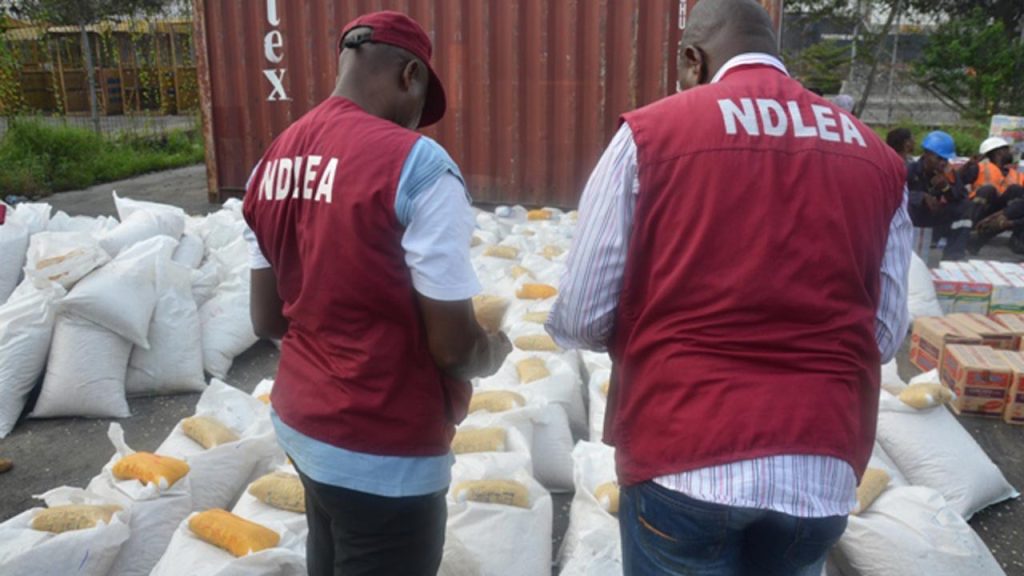
While acknowledging that the destruction of illegal cannabis plantations by the National Drug Law Enforcement Agency (NDLEA) is backed by law, the legal practitioners argued that enforcement alone is insufficient to address the root drivers of the nation’s drug crisis. They advocated for government-funded transition programs to help growers shift toward legitimate mixed-crop farming.
Mrs. Vivian Ekwegh, a Lagos-based attorney specializing in drug-related litigation, warned that destroying farms without offering alternative income sources forces affected farmers back into illegal operations out of economic survival.
“I think the government should consider alternative measures by empowering, encouraging, and supporting cannabis farmers to go into other types of farming with their farmland rather than destroying their farms and seizing their land,” Ekwegh said. “People tend to be recalcitrant when they have no other means of survival, so government can give them grants and support to cultivate other crops.”
Ekwegh noted that several international jurisdictions have successfully commercialized regulated cannabis cultivation for medicinal and industrial exports, suggesting Nigeria could tap into similar revenue streams if strict regulatory frameworks are established. She observed, however, that the government remains hesitant to legalize the crop due to fears of abuse and regulatory weaknesses.
Echoing similar concerns, Chief Benson Ndakara, a former NDLEA operative and legal practitioner, emphasized that plant eradication measures fail to address the underlying economic potential and lawful applications of the plant.
Ndakara pointed out that cannabis yields distinct compounds—such as non-psychoactive Cannabidiol (CBD), used widely in medicine, and Tetrahydrocannabinol (THC), which requires rigorous control due to its psychoactive properties.
“During my visit to London, I saw it myself. Sadly, however, we do not have that technology yet in Nigeria,” Ndakara stated, adding that Nigeria’s legal framework requires comprehensive reform to accommodate restricted, lawful processing.
On her part, Mrs. Elizabeth Chiozor identified pervasive youth unemployment as a major catalyst fueling both illicit cultivation and substance abuse across the country.
“A most tactical approach in combating illicit drug plants is for government to create more job openings to keep the youths lawfully engaged,” Chiozor said. “If you check around, it is easy to observe that many of our youths are addicted to harmful drugs, and more worrisome is that they even know how and where to cultivate it. Once they are productively occupied in their respective fields of employment, it simply becomes inconvenient for them doing drugs.”

The legal experts jointly concluded that sustainable drug control in Nigeria requires a multi-pronged approach that balances strict law enforcement with economic empowerment, youth employment, and modernized regulatory oversight.