
By Stephen Simon
The Nigerian Army has cautioned that putting a decisive end to banditry across Sokoto, Kebbi, and Zamfara states will require more than kinetic military operations, emphasizing that the socio-political and economic drivers of insecurity in the North-West must be comprehensively addressed.
Speaking on the sustainability of recent operational successes in the region, the Acting Deputy Director of Army Public Relations for 8 Division and Sector 2, Operation Fansan Yamma, Lt. Col. Olaniyi Osoba, warned against relying solely on short-term tactical gains as a definitive benchmark for long-term victory.
“Successfully combating terrorism and banditry requires a whole-of-society approach that addresses both root causes and immediate threats,” Osoba stated. “While our recent operational achievements are encouraging, it is premature to use short-term gains as a definitive benchmark for overall progress.”
He stressed that lasting stability will depend on tackling the underlying conditions that fuel recruitment and criminal enterprise across affected rural enclaves.
“Once the socio-political and economic challenges are resolved, there will be an end to it. And these take time,” he added.

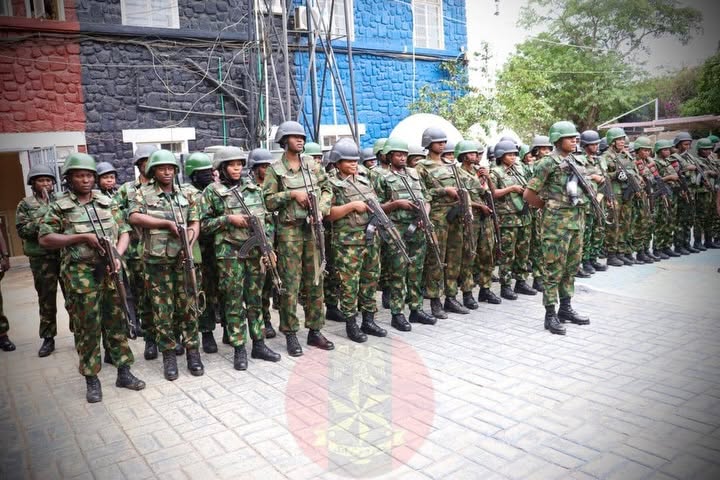
Osoba’s assessment comes amid intensified clearance operations under Operation Fansan Yamma across forest hideouts in the three North-Western states. Recent military drives have led to the neutralization and arrest of several suspected terrorists, the rescue of abducted victims, and the confiscation of arms, motorcycles, and logistics networks.
Despite these inroads, remote communities in Sokoto, Kebbi, and Zamfara continue to grapple with persistent threats, kidnappings, and displacement driven by armed groups exploiting difficult terrain.
The military’s stance underscores that while troop pressure will continue to deny criminal elements freedom of movement, non-kinetic measures—including targeted socio-economic interventions and civic engagement—remain vital to securing long-term peace in the region.