
By Stephen Simon
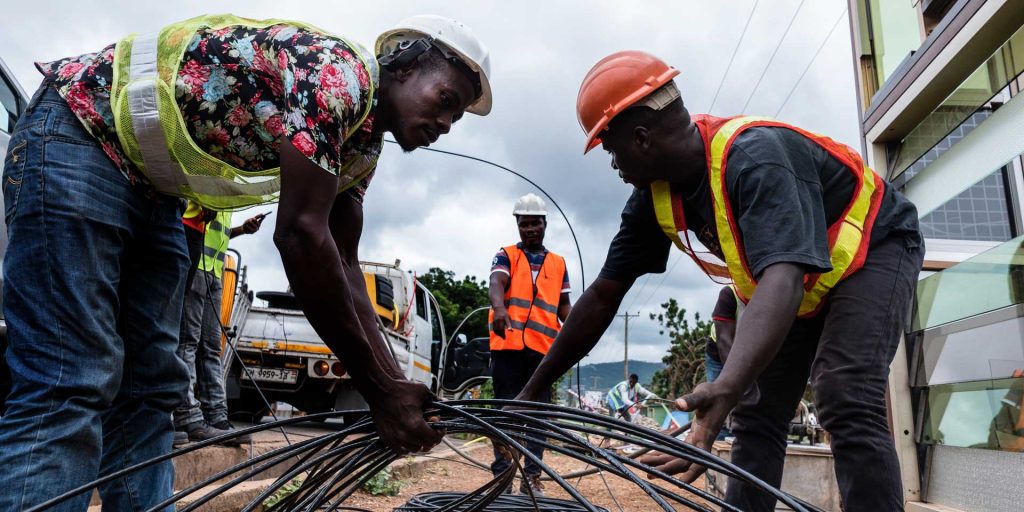
The Federal Government is seeking about $1.2 billion in private-sector capital to complete the financing of its planned 90,000-kilometre nationwide fibre-optic network, with physical deployment expected to begin in October.
The project, known as Building Resilient Digital Infrastructure for Growth, or Project BRIDGE, is estimated to cost about $2 billion and is designed to significantly expand Nigeria’s national broadband backbone while improving access to high-speed internet across the country.
Government records and financing disclosures show that about $800 million has already been secured through sovereign financing commitments from international development institutions.
The secured financing comprises a $500 million facility from the World Bank, a $100 million investment from the European Bank for Reconstruction and Development and a $200 million loan approved by the African Development Bank.

The remaining $1.2 billion is expected to come largely from private-sector investors under the project’s public-private partnership structure. The government has established Bridge Open Access as the special-purpose vehicle that will oversee financing, construction and operation of the network.
The Communications, Innovation and Digital Economy Minister, Bosun Tijani, had earlier announced that physical deployment would commence in October following the incorporation of Bridge Open Access in August.
The project is expected to expand Nigeria’s existing fibre network from about 35,000 kilometres to approximately 125,000 kilometres when the additional 90,000 kilometres are completed.
The network is designed to provide open-access infrastructure for telecommunications companies, internet service providers, banks, cloud-service providers and other qualified users rather than operating as a retail internet service.
According to the Federal Ministry of Communications, Innovation and Digital Economy, Project BRIDGE is intended to connect all 36 states and the Federal Capital Territory and reach more than 770 local government areas. It is also expected to extend connectivity to schools, hospitals, businesses and underserved communities.
The African Development Bank said its $200 million financing would support the expansion of Nigeria’s fibre backbone, digital skills development and job creation, while helping extend connectivity to communities and economic centres across the country.
Tijani has also said the government now expects the 90,000-kilometre network to be delivered within three years, revising an earlier five-year implementation timeline. The accelerated target is expected to bring faster connectivity to millions of Nigerians who remain without reliable internet access.
The government is positioning the project as a major component of its digital-economy strategy, with improved broadband expected to support education, healthcare, financial services, commerce, technology and other digitally driven sectors.
The immediate challenge, however, is mobilising the outstanding private capital and ensuring that the October rollout translates the ambitious national connectivity plan into actual infrastructure on the ground.