
By Stephen Simon
President Bola Tinubu has renewed Nigeria’s demand for a comprehensive reform of the United Nations Security Council, insisting that Africa must be given at least two permanent seats with full rights and responsibilities, including veto powers for as long as the privilege exists.
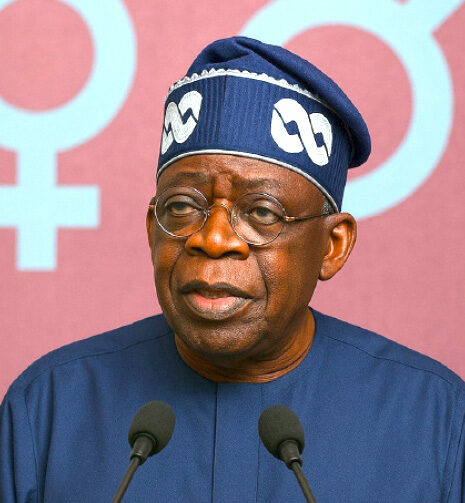
Tinubu made the demand in his national statement at the 81st United Nations General Assembly in New York, delivered on his behalf by Vice-President Kashim Shettima on Thursday.
Nigeria also called for five non-permanent seats for Africa, in line with the continent’s longstanding common position under the Ezulwini Consensus and Sirte Declaration.
Tinubu argued that the current configuration of the Security Council no longer reflected contemporary geopolitical realities, saying the world in 2026 could not continue to operate under a power structure established in 1945.
He said Africa could no longer remain without permanent representation on a body whose decisions have significant consequences for the continent, despite its contributions to global peace and security.
“Nigeria demands, in accordance with the Ezulwini Consensus and the Sirte Declaration, at least two permanent seats for Africa, with all the rights and responsibilities of permanent membership, including the veto for as long as it exists, and five non-permanent seats in total,” the President said.

He said Nigeria was prepared to assume greater responsibility in international peace and security, citing the country’s contributions to peacekeeping, mediation and conflict resolution in Liberia, Sierra Leone, Darfur, Mali and The Gambia.
Tinubu also called for urgent diplomatic efforts to end conflicts in Sudan and other troubled regions, stressing the need for the protection of civilians and respect for international humanitarian and human rights law.
On the global economy, the President called for reforms to the international financial architecture, wider access to concessional financing and debt frameworks that take the development needs of poorer countries into account.
He also urged more equitable climate financing, arguing that developing countries should be supported to industrialise, reduce poverty and expand energy access while pursuing low-carbon development.
Tinubu further highlighted Nigeria’s Energy Transition Plan and its target of achieving net-zero emissions by 2060.
On artificial intelligence, he called for responsible deployment of the technology, saying AI could either serve humanity or be used for destructive purposes depending on how it was governed.
The President also urged greater international cooperation against terrorism, organised crime, cyberattacks and illicit finance.
The UN Security Council currently has 15 members, including five permanent members — China, France, Russia, the United Kingdom and the United States — all of which possess veto powers. Africa currently has no permanent seat on the Council.
Tinubu’s renewed demand comes amid wider calls for Security Council reform, with UN Secretary-General António Guterres also arguing that the Council must be made more representative of today’s world.
Nigeria’s position therefore places the country once again at the centre of Africa’s long-running campaign for permanent representation and greater influence in the UN’s most powerful decision-making body.