
By Stephen Simon
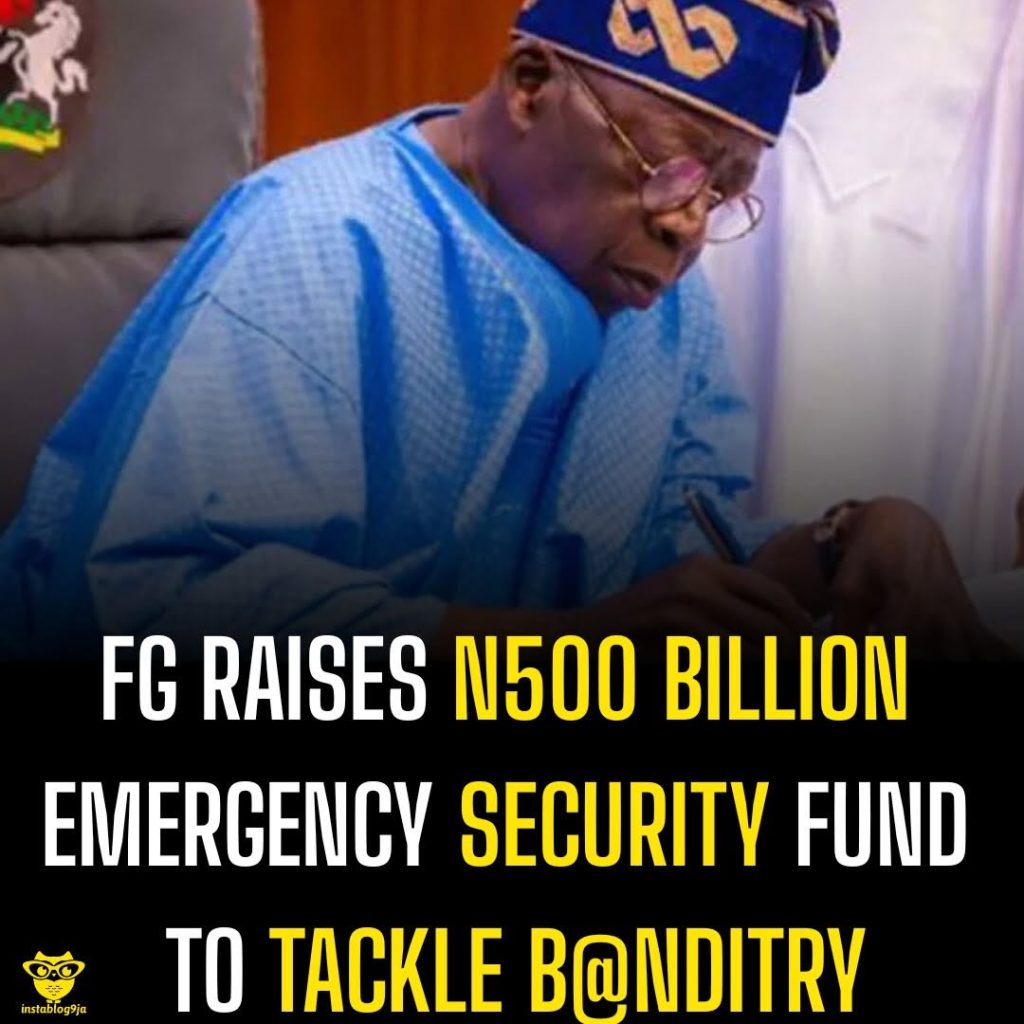
The Federal Government has approved a ₦500 billion emergency security fund as part of efforts to strengthen the country’s response to rising insecurity, banditry and violent crimes across various regions.
The intervention comes amid growing concerns over persistent attacks on communities, highways and rural settlements, particularly in parts of northern Nigeria where armed groups have intensified kidnappings, killings and raids in recent months.
The fund, reportedly drawn from national revenue allocations, is intended to provide additional financial support for security operations aimed at combating banditry, terrorism and other criminal activities threatening public safety.
Government officials said the initiative forms part of broader efforts to equip security agencies with the resources needed to enhance ongoing operations and improve their capacity to respond effectively to emerging security threats.
The latest move follows a series of attacks in several communities despite existing military and law enforcement operations across the country.
Security analysts have identified inadequate operational resources, weak intelligence gathering and the growing sophistication of criminal networks as some of the major challenges undermining efforts to address insecurity.
The emergency fund is expected to support the acquisition of security equipment, logistics, intelligence operations and the deployment of additional personnel to areas experiencing frequent attacks.
However, the development has also sparked renewed calls for transparency and accountability, with many Nigerians demanding proper oversight of how the substantial security allocation will be managed and utilized.

Analysts maintain that while increased funding is necessary, meaningful progress will depend on effective coordination among security agencies, improved intelligence sharing and the successful implementation of security strategies.
As insecurity remains one of Nigeria’s most pressing challenges, citizens will be watching closely to see whether the ₦500 billion intervention translates into improved safety, protection of lives and property, and renewed public confidence in the country’s security architecture.