
By Stephen Simon
The Nigeria Customs Service (NCS) says it is on course to achieve its ₦11 trillion revenue target for 2026 following significant improvements in its operations through technology and data-driven reforms.
The Comptroller-General of Customs, Adewale Adeniyi, disclosed this in a compendium released on Tuesday, saying the service generated ₦4.03 trillion in the first half of the year alone.
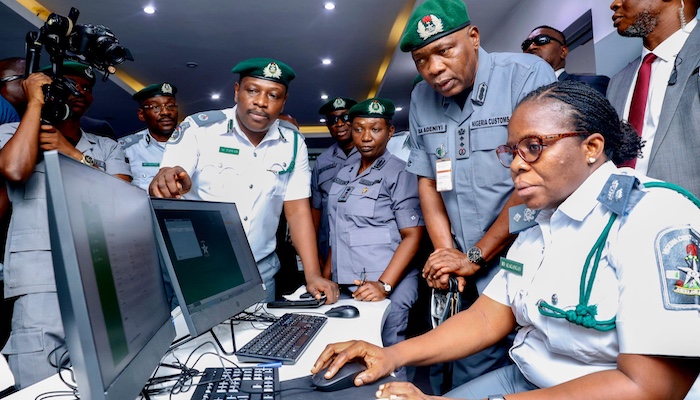
Adeniyi attributed the improved revenue performance to the automation of customs processes, intelligence-led enforcement, improved trade facilitation and stronger collaboration with stakeholders.
According to him, the service has deliberately reduced human discretion in its core operations by introducing standardised rules, risk-based systems and automated valuation references aimed at blocking revenue leakages.
He said the reforms had also helped the service to improve its engagement with compliant traders while ensuring that customs operations did not unnecessarily hinder legitimate businesses.
Adeniyi further disclosed that the NCS had adopted Time Release Studies to measure and reduce the time required to clear cargo at ports and border stations.
He said the data-driven approach was helping to reduce delays and business costs while improving Nigeria’s performance in global trade facilitation.
Beyond revenue collection, the Customs boss said the service had intensified collaboration with other security agencies to tackle smuggling, illicit financial flows, wildlife trafficking and other forms of cross-border crime.
He said the service had intercepted illegal wildlife products, including pangolin scales and ivory, while intelligence-led operations had also disrupted syndicates involved in cross-border criminal activities.

Adeniyi said the NCS was evolving beyond its traditional revenue-collection role to become a facilitator of legitimate trade, a generator of economic data for national planning and a key institution in protecting Nigeria’s borders.
With ₦4.03 trillion already generated in the first six months, the service will now be under pressure to sustain the momentum if it is to achieve its ₦11 trillion full-year target.