
By Stephen Simon
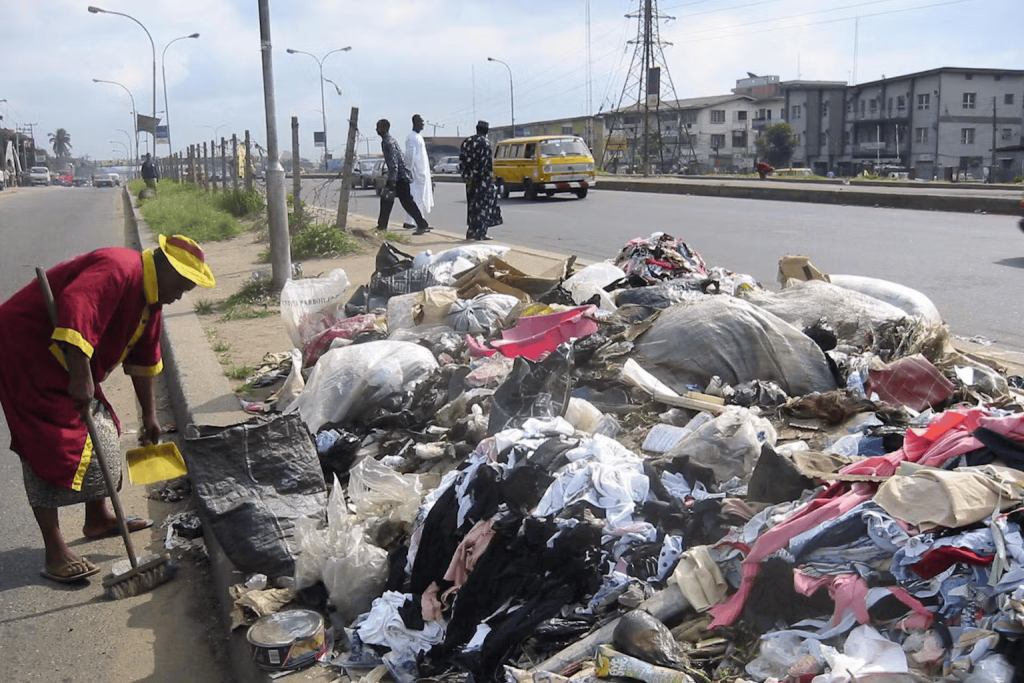
Lagos State is facing an increasingly serious waste management challenge, with refuse piling up across several parts of the metropolis and raising concerns about public health, environmental safety and the effectiveness of the state’s waste disposal system.
For a city that prides itself on being Nigeria’s commercial hub and a major megacity, the growing presence of uncollected refuse is deeply troubling. Residents in some communities reportedly endure waste that remains uncleared for weeks or even months, creating unsanitary conditions and leaving parts of the city littered with heaps of rubbish.
The problem is particularly visible at major waste disposal sites, including the Olusosun dumpsite in Ojota, where the volume of refuse and associated odour have become persistent concerns.
One major difficulty confronting the state is the gap between the amount of waste it expected to generate and the actual volume produced daily. Lagos Deputy Governor, Obafemi Hamzat, recently disclosed that the state had initially estimated daily waste generation at about 13,000 tonnes but discovered that the figure was closer to 17,000 tonnes.
Such a significant difference has serious implications for planning. Without accurate data, the government cannot properly determine the number of trucks, personnel, transfer stations, landfills and other facilities required to manage the waste generated across the state.
The condition of the private waste collection system has also contributed to the crisis. Although hundreds of Private Sector Participants are involved in refuse collection, some operators reportedly lack sufficient functional trucks to meet the demands of the rapidly expanding population.
The Lagos State Waste Management Authority, LAWMA, has also pointed to the declining capacity of some landfills as another challenge. Several disposal facilities are reportedly approaching the end of their operational lifespan, while flooding and poor access roads have further complicated waste evacuation.
Increasing operational expenses have added to the pressure. Higher diesel prices, vehicle maintenance costs and rapid urbanisation have made waste collection more expensive at a time when the volume of refuse generated continues to rise.
With official collection systems struggling, some residents have resorted to indiscriminate dumping. Waste is often thrown into drainage channels, along roadsides or handed over to informal cart-pushers who may subsequently dispose of it at unauthorised locations.
Such practices create additional problems. Blocked drainage channels can worsen flooding, while improperly disposed waste creates breeding grounds for disease vectors and threatens the overall health of communities.

The state government’s decision to procure additional waste collection trucks is therefore a welcome development. However, reports that the delivery of 100 new trucks, initially expected in July, has been postponed until September mean that residents may have to endure the present difficulties for longer.
Lagos needs more than temporary interventions. It requires a comprehensive and sustainable waste management strategy that can keep pace with its population growth.
The state should strengthen genuine partnerships with competent private-sector operators and ensure that contractors have the equipment and capacity necessary to deliver reliable services. The experience of the administration of former Governor Babatunde Fashola, which established the PSP model, also offers useful lessons that should be examined and adapted where necessary.
Accurate data must become a central part of the system. Lagos should know precisely how much waste is generated in each part of the state, where it comes from, how much is collected and where it ultimately ends up. Such information would enable the government to plan infrastructure and allocate resources more effectively.
Technology should also play a greater role. Digital tracking of collection vehicles, electronic monitoring of waste disposal and data-driven route planning could improve efficiency and reduce illegal dumping. International examples show that technology can significantly improve the organisation of waste collection and recycling.
At the same time, Lagos should pursue recycling and waste-to-energy solutions more aggressively. Turning organic and other recyclable waste into useful products can reduce pressure on landfills while creating economic opportunities.
The planned development of transfer loading stations, material recovery facilities and waste-to-energy infrastructure is encouraging. However, such projects must be properly funded, efficiently managed and completed within clearly defined timelines.

The state should also intensify public education and enforcement. Residents need to understand the dangers of indiscriminate dumping, while those who deliberately violate environmental regulations should face consistent sanctions.
Ultimately, Lagos cannot afford to treat waste management as an emergency that requires attention only when refuse begins to accumulate. Waste generation will continue to increase as the population and economy expand.
The state therefore needs a long-term system built around reliable data, modern infrastructure, efficient private-sector participation, technology, recycling and strong enforcement.
For a city of Lagos’ size and importance, persistent heaps of uncollected refuse should not be accepted as normal. The government must act decisively to restore cleanliness and build a waste management system capable of serving the city for decades to come.