
By Stephen Simon
Political parties and candidates contesting the 2027 general elections have pledged to conduct peaceful and issue-driven campaigns after signing a national peace accord in Abuja on Tuesday.
The agreement, facilitated by the National Peace Committee in collaboration with The Kukah Centre, was signed ahead of the formal commencement of campaigns for the elections.
Among other commitments, the parties and candidates agreed to reject violence, hate speech, personal attacks, misinformation and other actions capable of threatening the credibility and peaceful conduct of the polls.
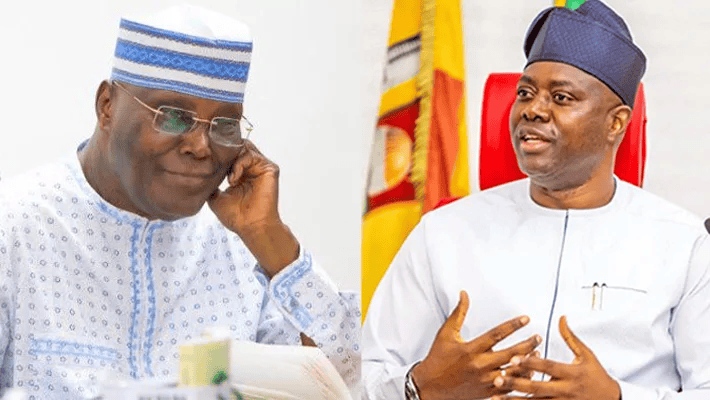
However, some prominent opposition figures were absent from the ceremony, including former Vice-President Atiku Abubakar, the presidential candidate of the African Democratic Congress, and Oyo State Governor Seyi Makinde, who is contesting the presidency on the platform of the Nigeria Democratic Congress.
President Bola Tinubu, the All Progressives Congress presidential candidate seeking a second term, was also absent and was represented by the Secretary to the Government of the Federation, Senator George Akume.
The event was attended by the Chairman of the Independent National Electoral Commission, Prof. Joash Amupitan, as well as several presidential candidates and representatives of political parties.
Former Chief of Defence Staff, Gen. Martin Luther Agwai (retd.), represented the Chairman of the National Peace Committee and former Head of State, Gen. Abdulsalami Abubakar (retd.).
The signing took place a day before the commencement of public campaigns and rallies, scheduled by INEC to begin on Wednesday, August 19, 2026.
Under INEC’s revised timetable, the presidential and National Assembly elections will take place on January 16, 2027, while governorship and State House of Assembly elections are scheduled for February 6, 2027.
Speaking on behalf of Tinubu, Akume called on political parties and candidates to put the interests of the country ahead of personal ambitions and partisan considerations.
He said elections should be viewed as an opportunity for Nigerians to choose their leaders rather than a battle in which political opponents must be defeated by all means.
Tinubu, in his address, urged politicians to avoid exploiting ethnic and religious divisions during the campaign, stressing the need for candidates to compete through policies and ideas.
He said political disagreements were inevitable but warned that such disagreements should not degenerate into violence, incitement or divisive rhetoric.
The President also said his administration and the APC would respect the provisions of the peace accord and reject hate speech, misinformation, violence and incitement, including the use of social media and artificial intelligence to manipulate public opinion.

Tinubu further highlighted the role of electoral technology, including Permanent Voter Cards and the Bimodal Voter Accreditation System, in improving Nigeria’s electoral process.
In his remarks, Amupitan described the peace accord as a significant commitment rather than a mere ceremonial exercise.
He said the agreement was particularly important because it was being signed immediately before campaigns officially begin.
According to him, the electoral commission expects political parties and candidates to focus their campaigns on solutions to Nigeria’s major challenges, including insecurity, the economy, healthcare, education, infrastructure and social inclusion.
The INEC chairman said intelligence gathered through the National Peace Committee’s Election Security Information Hub had revealed a worrying increase in hate speech, political polarisation, misinformation and personality-based political attacks.
He warned that these trends could undermine the 2027 electoral process if left unchecked.
Amupitan also cautioned political actors against declaring themselves winners before results are officially announced and urged parties to ensure that their supporters, campaign teams and online platforms respect the principles contained in the accord.
He noted that the rapid growth of social media and artificial intelligence had created new challenges, particularly the spread of fabricated information and attempts to manipulate public perception.
The INEC chairman assured all political parties that the commission would remain impartial and provide a level playing field for every candidate.
He urged political leaders to remember that the ultimate objective of an election should be to serve the people, warning that gaining political power at the cost of peace, lives and institutional credibility would amount to a hollow victory.
With campaigns now officially set to begin, political parties are expected to take their messages to voters across the country as the race for the 2027 elections gathers momentum.