
By Stephen Simon
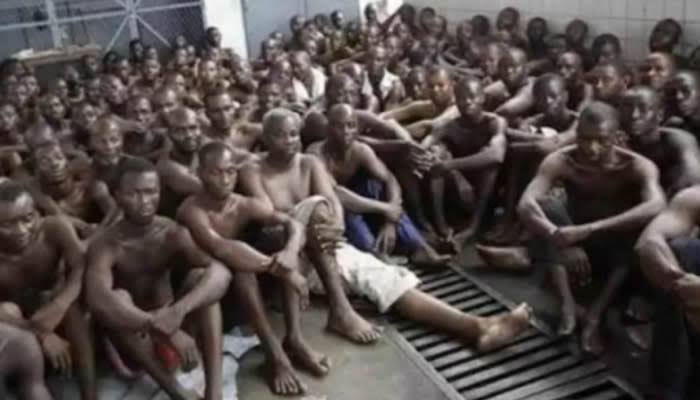
More than 250 inmates at the Jalingo Custodial Centre in Taraba State are reportedly sleeping on mats spread across the floor as severe overcrowding and prolonged pre-trial detention continue to expose deep problems within the state’s criminal justice system.
The disturbing situation was disclosed by a former inmate, Gabriel Olayinka, who said the facility, originally designed to accommodate about 250 inmates, currently houses more than 500.
Olayinka, who is the Chief Executive Officer of Taraba News and SUM TV, said he was speaking from personal experience after spending time at the custodial centre.
He made the disclosure when the newly elected Chairman of the Nigerian Bar Association, Jalingo Branch, Daniel Saredau, led members of his executive on a courtesy visit to media organisations in the state.
According to Olayinka, about 80 per cent of the inmates at the centre are awaiting trial, with some having remained in custody for between five and eight years without their cases being concluded.
He said the overcrowding had become so severe that more than 250 inmates had no proper sleeping spaces and were forced to sleep on mats placed directly on the floor.
Beyond the poor living conditions, Olayinka expressed concern that prolonged detention of people awaiting trial amounted to a major challenge to the administration of criminal justice, particularly where accused persons had not been convicted of the offences for which they were being held.
He also warned that the overcrowded conditions could expose inmates to serious health and sanitation problems.
Olayinka identified delays in obtaining legal advice from the Department of Public Prosecutions as one of the factors contributing to prolonged detention.
He also raised concerns over cases in which suspects are remanded by magistrate courts for offences over which the courts lack jurisdiction to conduct trials, saying such situations could leave accused persons in custody for years while they await further legal processes.
He therefore urged the NBA and other stakeholders in the justice sector to make prison decongestion, speedy trials and the reduction of awaiting-trial populations priorities.

Responding, Saredau acknowledged the concerns and promised that the NBA Jalingo Branch would work with relevant institutions to improve justice delivery in the state.
He disclosed that the branch had already engaged the Chief Judge of Taraba State, the Commissioner for Justice and Attorney-General, as well as security agencies including the Nigeria Police Force and the Nigeria Security and Civil Defence Corps.
Saredau also announced plans for a stakeholders’ roundtable involving key actors in the justice sector to examine the challenges and develop practical solutions.
He said the proposed meeting would also involve the media to promote transparency and increase public awareness of efforts to reform the justice system.
The NBA chairman said the branch would use its two-year tenure to strengthen human-rights advocacy, law reform, Bar-Bench relations and institutional cooperation, among other priorities.
The situation at the Jalingo centre is not entirely new. Taraba has continued to grapple with prolonged pre-trial detention, with 13 inmates reportedly released in November 2025 after spending between one and six years in custody without trial. In March 2026, the Taraba Chief Judge also reviewed 35 awaiting-trial cases at the Wukari custodial centre as part of efforts to decongest correctional facilities.
The latest revelations have therefore renewed calls for urgent action to tackle delays in criminal trials, improve access to legal representation and ensure that awaiting-trial inmates do not spend years behind bars without their cases being determined.
For the hundreds sleeping on the floor in Jalingo, however, the debate over justice reform is not an abstract policy issue. It is a daily struggle for space, dignity and hope while waiting for the courts to determine their fate.