
By Stephen Simon
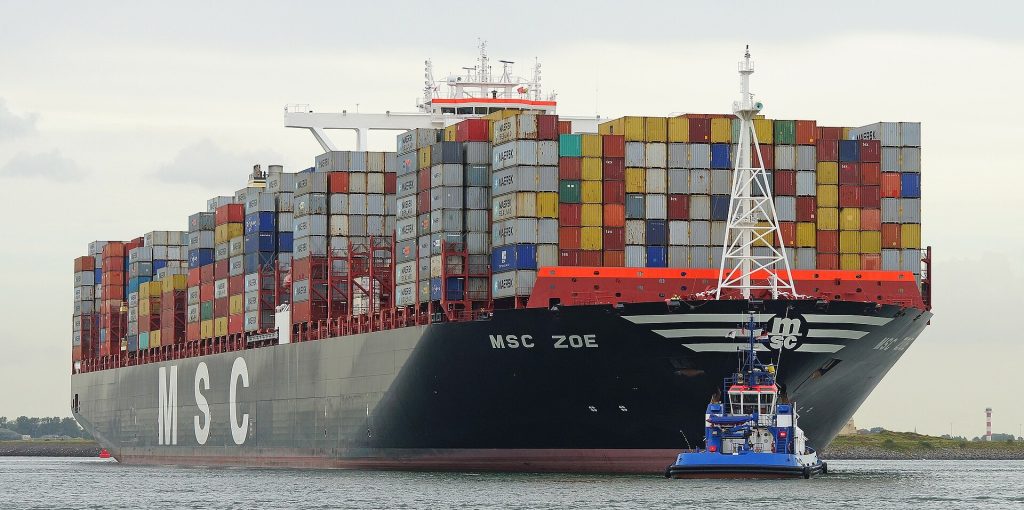
Mediterranean Shipping Company (MSC), the world’s largest container shipping line, has signed a 45-year sub-concession agreement with Nigerdock to develop and operate a dedicated container terminal at Snake Island Port in Lagos.
The agreement is expected to deepen MSC’s long-term investment in Nigeria’s maritime and logistics sector, with the company putting its total infrastructure and logistics commitment in the country at more than $1 billion.
The proposed terminal will occupy 30 hectares of the Snake Island Port facility and is scheduled for completion in 2028. It will feature a 910-metre quay, two ship berths, three barge berths and six ship-to-shore cranes, with the capacity to handle vessels requiring up to 18 metres of draft.
MSC has appointed ITB Nigeria Limited and Belgium-based DEME Group as the engineering, procurement and construction contractors for the project.
The agreement was described by Maher Jarmakani, Chief Executive Officer of Nigerdock and Group Chief Executive of Jagal, as a significant development for Nigeria’s maritime industry and a major foreign direct investment commitment.
“This gives the world’s leading shipping line a home in Nigeria and brings significant foreign direct investment into the country,” Jarmakani said.
MSC President, Diego Aponte, said the new terminal would create fresh opportunities for the Nigerian economy, improve operational efficiency and strengthen Snake Island Port’s position as an important centre for international shipping.
The investment represents another major step in the transformation of Nigerdock, which has evolved from a company focused largely on ship repair and fabrication into a broader maritime infrastructure, logistics and port services business.
The company is part of the Jagal Group, founded by Anwar Jarmakani in 1977, about 14 years after he arrived in Nigeria from Syria. Jarmakani remained group executive chairman until his death in September 2021.
Jagal initially built its business around construction and real estate before expanding into the manufacturing of health, hygiene and household products through partnerships with multinational companies during the 1980s.
The group later moved into the oil and gas industry in the 1990s through joint ventures involving international companies, including Norway’s Fred Olsen Energy, China’s Sinopec and Lamnalco of the Netherlands.
Over the years, the group expanded its interests further into maritime infrastructure, logistics and other sectors, while Nigerdock became increasingly prominent in ship repair, fabrication and specialised industrial services.
The latest investment is also linked to a broader government strategy to expand Nigeria’s maritime infrastructure through private-sector capital. The Federal Executive Council approved the development of Snake Island Port in May 2023.
In November 2024, Nigerdock signed a 45-year concession agreement with the Nigerian Ports Authority (NPA) covering an 85-hectare facility comprising three terminals and a combined quay length of about 2.5 kilometres.

Total private investment expected across the wider concession is projected to exceed $1.85 billion, comprising an initial investment of about $1 billion and a further $850 million in reinvestment over the life of the concession.
The Federal Government is expected to generate more than $5.2 billion in revenue from the concession over the 45-year period.
Managing Director of the Nigerian Ports Authority, Abubakar Dantsoho, said the agreement was consistent with the government’s objective of improving Nigeria’s competitiveness in the global maritime sector.
He said the NPA would continue to work with private-sector operators to unlock the value of investments in port infrastructure while improving the country’s position as a regional maritime hub.
Operations at Snake Island Port commenced this year, coinciding with Nigerdock’s 40th anniversary in April.
At the anniversary event, Jarmakani highlighted the company’s transition from ship repair and fabrication into port operations, logistics support and free-zone services, while also noting its contribution to developing specialised manpower through the training of thousands of workers.
The MSC investment is expected to further strengthen that transition and could position Snake Island Port as an increasingly important gateway for containerised cargo and regional trade in West Africa.