
By Stephen Simon
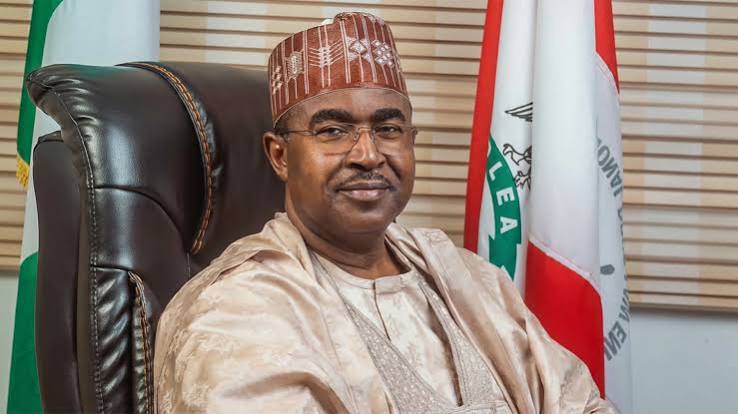
The Chairman of the National Drug Law Enforcement Agency, NDLEA, Brig. Gen. Mohamed Marwa (retd.), has said the fight against drug trafficking will remain incomplete unless criminals are stripped not only of their freedom but also of the wealth used to sustain their operations.
Marwa stated this while delivering a presentation at the 43rd Cambridge International Symposium on Economic Crime, organised by the Centre for Geopolitics at the University of Cambridge, United Kingdom.
Speaking on the topic, “Criminal Property and the Criminal Process: How Can We Make It More Effective?”, the NDLEA boss told an international audience of judges, law enforcement leaders, financial intelligence experts and academics that arrests and convictions alone could not dismantle organised criminal networks.
According to him, a drug trafficker who goes to prison but retains access to the proceeds of crime still has the capacity to finance illegal activities through associates, family members or front companies.
Marwa, who spoke during a session chaired by Honourable Judge Wendy Tien, compared such an approach to cutting down a weed without uprooting it.
He explained that unless the financial base of a criminal enterprise is destroyed, the network could easily regroup and resume operations.
The NDLEA chairman said the agency had adopted a number of measures to strengthen the tracing, freezing, forfeiture and management of assets linked to drug trafficking and other proceeds of crime.
He said the strategies were backed by relevant provisions of the NDLEA Act 2004, the Proceeds of Crime (Recovery and Management) Act 2022 and the Money Laundering (Prevention and Prohibition) Act 2022.
Citing some of the agency’s successes, Marwa referred to the forfeiture of Hook Hotel, allegedly connected to a fugitive drug suspect. He said the property was recovered through non-conviction-based forfeiture and later sold for $4.2 million, with the proceeds paid into the Federal Government’s forfeited assets account at the Central Bank of Nigeria.
He also disclosed that the NDLEA had changed its investigative approach by bringing investigators and prosecutors together from the early stages of cases.
According to him, the collaboration has helped the agency move faster in obtaining restraint orders and preventing suspects from disposing of assets while investigations and prosecutions are ongoing.
Marwa said that in one recent operation, the agency froze bank accounts holding more than $7 million and obtained interim forfeiture orders over assets worth billions of naira, including filling stations, buildings and vehicles allegedly connected to a methamphetamine trafficking syndicate.

He also spoke on the case involving Nigerian billionaire and suspected drug baron, Amadi Simon, who was arrested in Switzerland in a joint operation involving the NDLEA, the United States Drug Enforcement Administration and authorities in Switzerland, Greece and France.
According to Marwa, three hotels linked to the suspect were placed under professional asset managers to ensure that the businesses continued to retain their commercial value while the case proceeds through the courts.
He said shutting down such income-generating properties could result in the deterioration or loss of their value, making professional management a more effective option.
The NDLEA boss further identified unexplained-wealth provisions as a useful instrument in financial investigations and advocated the sale of perishable assets before the conclusion of criminal trials where necessary.
He said such measures were now reflected in Nigeria’s National Drug Control Master Plan 2026–2030.
Marwa summarised the agency’s asset recovery strategy around three key principles: acting quickly, preserving the value of seized assets and building lasting institutional structures.
However, he acknowledged that the process still faces obstacles, including delays in securing mutual legal assistance from other countries and inadequate capacity for complex forensic accounting.
He called for stronger and faster international cooperation, as well as wider acceptance of non-conviction-based forfeiture as a tool for depriving criminals of the proceeds of their illegal activities.
Marwa thanked the organisers of the symposium for the opportunity to present Nigeria’s experience, stressing that financial investigations and aggressive asset recovery must remain central to efforts aimed at dismantling the economic foundations of drug trafficking networks.